


Collaborative, open-plan offices are increasingly commonplace. However, for many people working in these types of spaces there is a downside. Offices full of people talking on the phone, conversations popping up around corners and general background noise can leave you feeling distracted, drained and unable to focus on your work. Even simple tasks can become unexpectedly time-consuming.
This is a problem we see a lot at Topaz Furniture. Businesses invest in beautiful open-plan furniture to create collaborative, flexible working environments, but all too often they forget about the acoustic repercussions of not having anything to absorb sound.
Noise travels, meetings overrun into breakout areas and before you know it your team are craving a cubicle so they can concentrate on their work. Luckily there are ways to solve this. By adding some carefully considered acoustic furniture and fixtures to your office, you can dramatically improve the atmosphere.
Take a look at our range of acoustic solutions here to start finding practical ways to reduce noise levels and improve teamwork.
While intended to promote interaction, open layouts can quickly breed frustration and impede focus if they’re too loud or chaotic. If your workspace is causing this, know that the issue isn’t you, but rather the environment itself.
Below we share our tips for creating quiet zones in busy offices, the acoustic solutions that might work best for you and your team, and how you can achieve the best of both worlds; a workspace that allows for collaboration without sacrificing your team’s ability to concentrate.
Table of Contents
- Why Noise Is One of the Biggest Barriers to Productivity
- What Are Quiet Zones in the Modern Workplace?
- Practical Acoustic Solutions for Busy Offices
- Designing for Focus Without Sacrificing Collaboration
- When to Rethink Your Office Acoustic Strategy
- Partnering with Experts to Design High-Performance Quiet Zones
- Build a More Focused, Productive Workspace Today
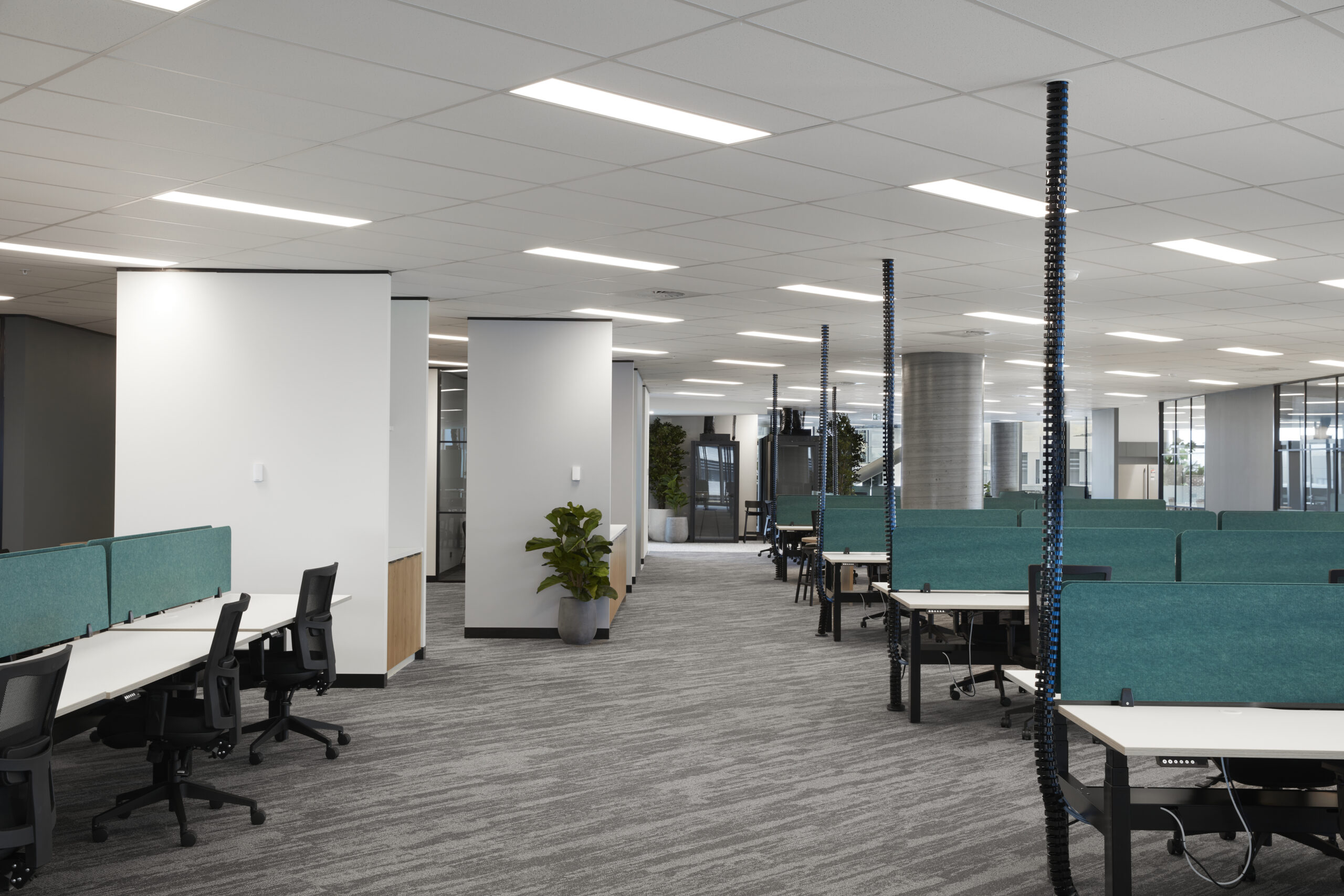
Noise can have an impact on an employee’s ability to focus, even if it’s relatively low-key background noise. When employees are interrupted, they need to spend time recalibrating and regathering their thoughts before continuing to work. Work takes longer, more mistakes are made, and more energy is spent concentrating. Interruptions don’t need to be loud to be distracting. In fact, random or sporadic noises can be the worst offenders.
That’s why many companies are introducing quiet spaces into their office designs. Today’s offices are more complex than ever, with collaboration and hybrid working requirements introducing new challenges for workplace strategists. Co-working offices can make communication easier among teams, but without the option to escape for quiet time they can actually become restrictive. Providing employees with access to quiet spaces allows them to switch from collaborative work to focused work with ease, accommodating all working styles.
Acoustic treatments are another key factor in crafting the perfect modern workspace. It’s important to know how acoustic solutions can benefit your office space, but it’s equally as important to understand why. These design elements work by absorbing and diffusing sounds within a room, minimising distractions and improving how teams communicate with one another.

Coworking spaces thrive on collaboration, but collaboration and quiet don’t always mix. To balance out the bustling energy of coworking and collaboration zones, many offices now include dedicated quiet zones: spaces meant for focused work or time away from distractions.
Quiet zones are becoming increasingly popular in coworking spaces as an alternative to collaboration-focused environments. They provide space for employees to hunker down with headphones and get some work done, attend and online meeting or to simply catch up on some thinking time. Far from replacing collaboration areas, they’re another option that rounds out an office’s floor plan with something a little more flexible.
Location is just as important as design when it comes to planning your quiet zones. You’ll naturally want to avoid placing them along busy foot traffic areas, near breakout spaces or community areas. Zones can be established with furniture, acoustic treatments and strategic design, without having to completely close off a space.
It’s all about finding that sweet spot between collaborative and quiet areas. The goal of a well-designed workspace isn’t to build silence, but to control noise. Plan for a mixture of spaces using productive office accessories like acoustic screens, soft furnishings and clever design to help create calm spaces that don’t feel isolated.
With Topaz Furniture’s versatile furniture ranges, you can design quiet zones that contribute to a holistic office space with freedom of choice for your team.

You don’t have to renovate your office space to achieve acoustic comfort. Instead, adding strategic elements in key locations can alter how sound travels through your workspace. The right soundproofing measures not only minimise noise pollution, but also make it easier to understand what people are saying, allowing for smoother shifts between collaborative and individual work, keeping the office feeling open.
Here’s some practical solutions for busy offices:
Acoustic Panels and Wall Treatments
Sound travels through space, but one of the most impactful places to reduce noise pollution is on your walls. That echoing, overwhelming sound we hear in open offices often comes from sound bouncing off rigid surfaces. Acoustic panels and wall treatments minimise and diffuse noise for a quieter atmosphere.
Install acoustic tiles or hush tiles into your workspace without disrupting your overall aesthetic. Used as statement walls or subtly installed around the room, these products decrease ambient noise in office settings without breaking up the professional look of your space. Placement is everything — concentrate on high traffic spaces, meeting rooms or any area where you’ve noticed noise accumulating.
Desk Screens and Dividers
Desk screens and dividers are sometimes the easiest changes to make. Not only do they help absorb sound between desks, they provide employees with some personal territory without completely isolating them.
Sound barriers, like dividers and screens, are key in open-plan areas, restricting how far noise spreads. They also visually define work areas, allowing employees to concentrate better on their work. The real advantage of desk dividers is that they’re easily implemented and modified as needs change.
Soft Furnishings and Sound Absorption
Sound waves are easily absorbed by soft materials which is why they play an important role in any acoustic treatment plan. Soft seating, upholstered lounge furniture and fabric finishes are just some of the ways you can deaden noise while increasing comfort for your employees.
These options work great in breakout spaces, informal meeting rooms or areas where there might otherwise be a lot of noise bleed. Soft furniture also makes your space feel more inviting and relaxed. It can help balance out hard surfaces and create an environment for all types of working styles. Solve your noise problems and make the office more inviting all at once.
Flooring, Ceilings, and Material Choices
Other great places to find acoustic improvement are with the materials used throughout your office. Consider the flooring, ceiling, and finishes. Materials like concrete, glass, and smooth flooring will create echo while softer materials will absorb sound.
Adding soft surfaces such as carpet squares, acoustic ceiling clouds, or textured finishes can greatly improve your noise level. Sometimes the smaller changes like area rugs in strategic places or specific materials can make all the difference.
When you think about each of these elements it can create a cumulative effect. You’re no longer focused on one area of acoustic design but multiple touch points that work together to achieve your goals of focus and comfort.
Phone Booths and Acoustic Pods
Phone booths and acoustic pods are great solutions for workplaces looking for something a little more structured. While still keeping employees situated within the office, they provide a specific location to focus, make calls and have private discussions. Soundproofing is taken to the next level in these enclosed or semi-enclosed spaces, drastically minimising noise from entering or escaping the pod.
Pods offer some conveniences that meeting rooms don’t. Pods slot easily into any space, pairing well with open-plan layouts to instantly establish quiet zones, no remodelling necessary. Plus, they work wonders for expanding teams and hybrid workspaces.
Pods can even eliminate common space congestion. If your team has a go-to spot to take private calls or get work done that requires concentration, there’s less noise disruption to the rest of your office. Everyone wins when your workplace can balance collaboration with the ability to focus.

Noise management isn’t about silencing teams or segregating individuals. It’s about inserting light layers into your design. Acoustic screens, zoning with furniture dividers, or utilising storage cabinets or soft seating can all act as buffers to absorb noise. These acoustic solutions reduce noise and improve focus while still allowing teams to feel connected and accessible.
Movement is another huge benefit of flexible office design when it comes to noise levels. Let’s face it; no office solution will be suitable for every mode of work all day long. Fighting that reality will only create frustration. Allowing your employees to move between collaborative spaces, focus zones, and informal seating will enable them to work where they feel will suit their task at hand best. This allows you to take the frustration out of the equation and let the needs of the office flow naturally.
Cater to your employees’ working styles. This may seem counterintuitive to the point above but everyone is different. Some people need white noise and hustle and bustle to feel productive. Others need complete silence to keep focused. By providing a range of spaces that support these varying needs you can cater to your employees’ natural working style.

Sooner or later, tweaks and adjustments just aren’t going to cut it for persistent noise problems. If your employees are continually finding ways to work around distractions instead of working with their space, maybe it’s time to hit pause and take a hard look at how your office might be holding your team back.
Furniture itself can also be the root of your noise issues. If you have furniture that wasn’t designed with sound in mind, you may actually be exacerbating the noise problem. Hard surfaces that are large and expansive, lack of soft material absorption or poor workstation configuration can leave your team feeling like their office is louder than it should. Or maybe you’ve done all the right things but your team still can’t focus. Either way, your current setup might be standing in the way of your team’s success.
Planning for the future is also a great reason to look at your acoustic strategy. Whether your teams are growing, your workflows are changing or you have newly adopted hybrid schedules, how your team uses your office is bound to evolve. Something that may have worked just fine for a smaller or more static team may not be ideal for a flexible, growing team. By acting now, you can future-proof your space before noise becomes a problem.
This is where the idea of building a high-performance office through acoustics really comes into play. By implementing strategies that not only reduce sound but promote focus and flexibility, you can future-proof your office so that it will continue to support your team’s ever-changing needs as expectations and work styles continue to evolve.
Signs Your Workspace Is Too Noisy
Sometimes noise issues aren’t obvious until they start affecting how your team works. What feels like a “busy office” can quickly become a barrier to focus, collaboration, and overall performance.
If you’re unsure whether noise is holding your workspace back, these common signs are a good place to start:
| What You’re Noticing | What It Might Mean |
|---|---|
| Employees wear headphones most of the day. | Your workspace lacks adequate acoustic control, forcing individuals to create their own quiet zones. |
| Frequent complaints about distractions or lack of focus. | Noise levels are interfering with deep work and concentration. |
| Teams book meeting rooms just to get quiet time. | There aren’t enough dedicated quiet spaces within the office. |
| Calls and meetings spill into open areas. | A lack of acoustic separation is affecting both collaboration and focus. |
| Employees move around the office to find somewhere quieter. | Your layout isn’t supporting different work modes effectively. |
| Echoing or “loud” feeling spaces. | Hard surfaces reflect sound instead of absorbing it. |
| Reduced productivity during busy office hours. | Peak noise periods disrupt workflow and performance. |
Quiet zones don’t happen accidentally, throwing some acoustic solutions around the office will help, but if you want high-performing spaces you need to plan for them. Consider the flow of sound, your team and how your layout supports both. That’s why acoustic planning should happen early. If acoustic treatments are an eleventh-hour decision, they tend to feel tacked-on, with limited integration within the overall design.
Which is why having the right partner by your side is so important. At Topaz Furniture our friendly team of experts work hand in hand with businesses and their designers, architects and builders to design spaces that suit the way you work. Not only will we supply your office furniture, we’ll help you work through your space, identify your challenges and design custom solutions that look seamless, feel practical and are built to last.
That’s what our Design Hub is all about. It’s a creative space to bounce ideas around, workshop your thoughts and ensure your vision aligns with your requirements. Whether you’re designing specific quiet spaces, looking to improve your office’s overall acoustics or planning an entire fit-out; our process has been designed to be collaborative from start to finish and include everyone from business owners to project teams.
Achieving noise-free concentration isn’t a happy coincidence — it’s carefully considered design, intentional furniture choices and understanding how your team works. Manage distractions with purpose-built furniture and well-designed space and watch as your office transforms into an environment that empowers your people to do their best work, every day.
Not sure where to start? Whether you’re looking to establish quiet areas, enhance your office acoustics or are embarking on an office fit-out, taking that first step can have a positive impact on how your team feels and performs.
Ready to create an office that supports focus and flexible working for the long haul? Request a quote from Topaz Furniture today and we’ll work with you to discover business-tailored solutions.
Get in touch and let’s talk about how we can help you achieve your office goals.
Author: Topaz Furniture

